


Fiber Internet vs. 5G: Which Is Better For Speed & Reliability at Home?
Fiber internet and 5G home internet can both deliver fast broadband internet speeds to your home, but they do it in very different ways. Fiber internet requires a wired connection to your house or business, usually via a fiber optic line. 5G home internet is a wireless broadband connection that communicates with your home network through radio signals between a cell tower and gateway or receiver inside your house. That’s the fundamental difference between fiber vs 5G home internet.
If you’re deciding between the two, fiber will usually give you more reliable service when you can get it. That’s particularly true for homes that need fast uploads, consistently low latency, symmetrical internet speeds, or dependable service during busy hours. 5G home internet can work well when fiber internet isn’t available in your area yet, or when you simply need internet access as quickly as possible.
Fiber Internet vs. 5G Home Internet Comparison
Before we get into each option below, here’s an overview of how fiber and 5G home internet stack up against each other across common categories.
| Category | Fiber Internet | 5G Home Internet |
|---|---|---|
| Connection type | Wired fiber-optic line | Wireless cellular signal |
| Reliability | Typically very consistent | Depends on signal and tower traffic |
| Download speeds | High and often predictable | Can vary by location and time |
| Upload speeds | Usually fast and symmetrical | Often slower than downloads |
| Latency | Generally low | More variable |
| Data congestion | Less affected at the local level | Can slow during busy periods |
| Weather and obstructions | Limited effect on buried lines | Signal may be affected by obstructions |
| Installation | Professional installation may be required | Usually self-installed |
| Portability | Fixed to the service address | Equipment may be easier to relocate, subject to provider rules |
| Best for | Remote work, gaming, streaming, smart homes | Flexible or rapidly deployed service |
Note that actual speeds will always vary by provider, specific plan, network setup, physical location, your equipment, and your home WiFi network.
What Is Fiber Internet?
Fiber internet service provides your home network with a physical connection made up of strands of fiber optic cable. Fiber optic lines may run directly to your house or stop at a neighborhood hub that connects to your house with a different type of connection (like coax cable or copper phone lines).
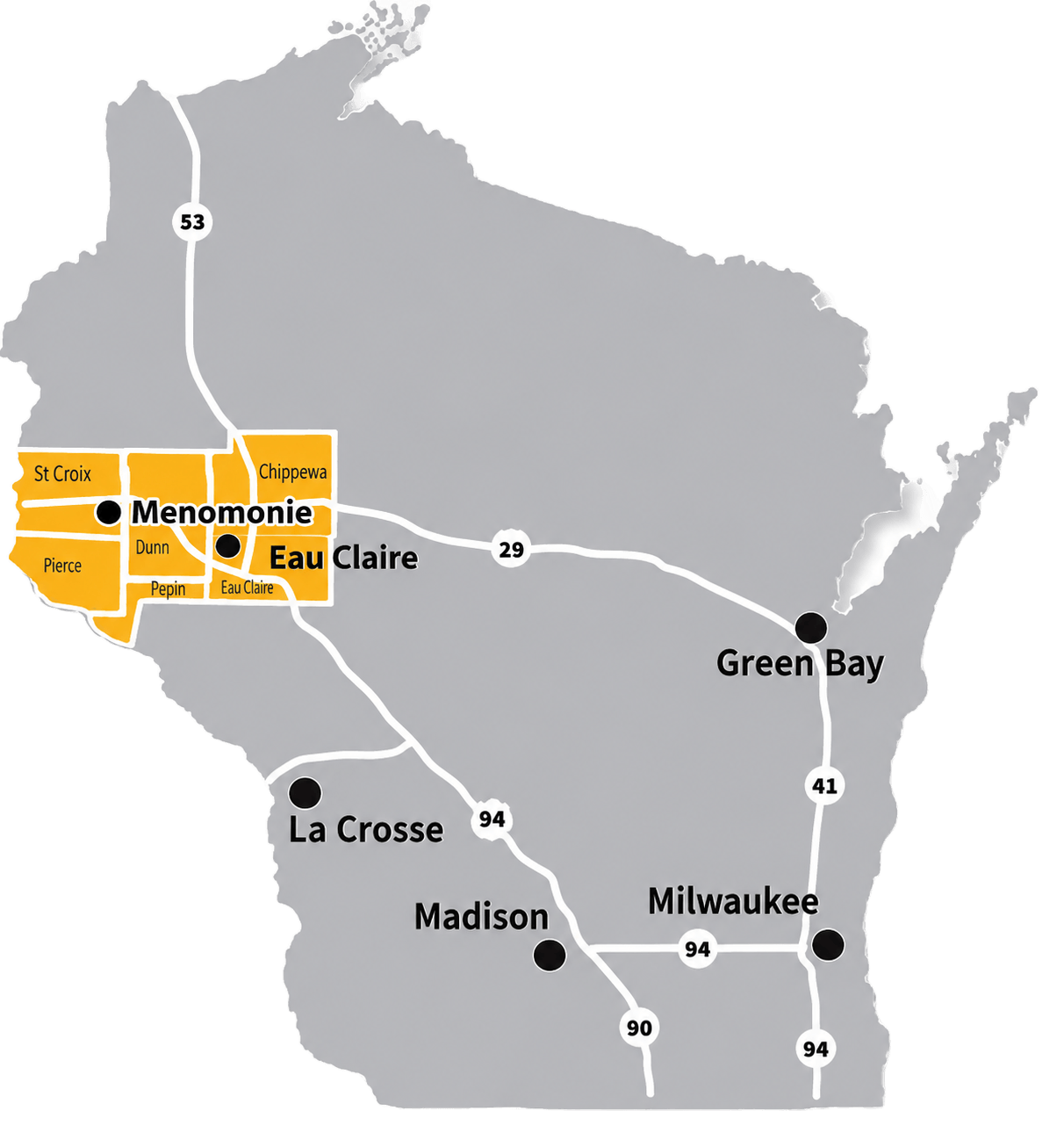
24-7 & West Wisconsin Telcom offers residential fiber internet service to several communities throughout western Wisconsin, with a variety of plans featuring symmetric download and upload speeds. You can browse available broadband availability for your address, and see our current packages and speeds.

What Is 5G Home Internet?
5G home internet is a type of fixed wireless broadband service. Essentially, a gateway or receiver hooked up to your WiFi connects to a cell tower within range of your house then shares that connection with your other home devices. Home internet gateways are designed to handle your whole household’s usage, but 5G home internet reliability can still be affected by how far you are from the tower, how much available signal you get, how many people are on the same spectrum, interference caused by trees and buildings, and overall network congestion.
The term 5G home internet can be slightly misleading because 5G refers to the radio waves themselves. Some 5G bands transmit faster but at shorter distances, while other bands can penetrate obstructions better without delivering maximum 5G speeds.
Fiber vs. 5G Home Internet: Which Is Better Comes Down to Reliability
Most of the time, fiber will be the more reliable choice for your home internet service because you’re physically connected to your provider’s network rather than streaming over a wireless connection like 5G home internet. Minor fluctuations in fiber speed will typically not be affected by how many people are using the network like you might experience with 5G.
Reliable internet also means consistent speed month-to-month, stable latency, dependable uploads, and minimal packet loss. Neither type of home internet service is completely immune to outages, but fiber internet reliability has a clear advantage over wireless technologies when it comes to overall reliability.
Speed and Performance
You’ll also notice that fiber plans tend to offer symmetrical upload and download speeds, whereas 5G home internet speeds can slow to a crawl when multiple devices are uploading data at once.
Upload Speeds: Why Should You Care?
Picture a household where one person is on a video call for work, another is uploading footage for a side project, and a couple of security cameras are streaming to the cloud around the clock. That’s exactly the kind of household where upload speed becomes essential.
Fiber internet providers often bundle symmetric or faster than download upload speeds right into the plan. A fiber internet upload speed that matches your download speed will make all the difference if you work from home, play online games, or stream videos.
Latency, Online Gaming, and Video Calls
For latency-sensitive tasks like online gaming or video calls, consistency is more important than the lowest possible ping. Low and reliable fiber internet latency from fiber internet service means you won’t experience interruptions that can happen over a wireless network.
5G latency will vary by provider, gateway you purchase, how your network is configured, and even time of day.
Congestion and Slowdowns During Peak Hours
Home internet network congestion is rarely a concern for fiber, since it’s a dedicated physical connection, but a 5G tower has to share its bandwidth with everyone nearby.
Terrain, Weather, and Distance
Physical barriers like hills, trees, and walls can slow or weaken your 5G home internet signal. Weather isn’t ideal for wireless signals either, so expect poor performance during extreme conditions if you live in an area with frequent thunderstorms or other severe weather.
Weather isn’t a problem for fiber internet speeds because they’re underground, but extreme conditions can still cause issues if a line goes down or service equipment gets damaged.
Underground fiber lines can also be damaged by excavation, so if you’re planning any digging on your property, contact Diggers Hotline first to have lines located and marked.
Connected Devices
Modern homes are full of connected devices, including TVs, phones, computers, tablets, smart speakers, security systems, cameras, thermostats, and gaming consoles all competing for bandwidth at once.
Households with many connected devices pulling high bandwidth are almost always better off with fiber, since fiber internet for smart homes offers stronger speeds and upload performance for smart devices.
Weak WiFi can make a good internet connection feel inconsistent, and a whole-home WiFi system can fix weak spots in your house, but it can’t fix a weak signal coming from your provider in the first place.
Installing Service
Fiber internet service isn’t nearly as fast to get installed, but that’s because your house needs to be professionally connected to your internet provider’s network.
Most fiber installations require scheduling a technician visit to run the line, verifying connections, and confirming everything works before they leave.
5G home internet is advertised as easy to install because most users will set it up themselves. There’s no required appointment, but like any wireless signal you’ll need enough strength to perform when you set it up.
For a full walkthrough of what to expect, see this fiber optic internet installation guide.
Availability in Rural Areas
5G internet in rural areas has the advantage because it’s wireless, and providers can install service with little more than line of sight to a tower. 5G internet service can reach rural customers much quicker than running a fiber optic line.
Rural fiber internet continues to expand into communities all over the country, but it can take years to reach certain areas, including yours. As soon as it does, contact us and we’ll see if your house qualifies for the internet.
Real World Usage
This chart is meant to help you find what fits your needs, rather than directly comparing fiber vs 5G home internet.
| Household Need | Better Fit | Reason |
|---|---|---|
| Remote work | Fiber | Stable upload speeds and video calls |
| Competitive gaming | Fiber | Lower, more predictable latency |
| Multiple 4K streams | Fiber | Consistent capacity |
| Cloud backups | Fiber | Stronger upload performance |
| Security cameras | Fiber | Continuous upstream data |
| Temporary housing | 5G | Faster setup and fewer installation requirements |
| Limited wired options | 5G | May be available without new cabling |
| Large smart home | Fiber | Capacity for many simultaneous devices |
| Light browsing | Either | Both may meet basic needs |
| Rural property | Depends | Compare actual fiber availability and cellular signal. 24-7 & West Wisconsin Telcom is the best option in Western Wisconsin. |
Whether you’re looking for the best internet for working from home or the best internet for gaming, your needs as an individual should determine what you choose. There’s really no universal answer to “is fiber better than 5G home internet?”
Price, Contracts, and Long-Term Value
Price is important, but shouldn’t be the sole deciding factor. When comparing prices you should take into consideration monthly price, introductory prices, equipment/installation fees, data caps and overage charges, contract length, price guarantees, upload speeds, minimum and maximum speed range, and throttling during peak times.
If you’re just surfing the web and sending emails you probably won’t notice the difference. 5G might even be the better short-term value based on price. But if you have a family that needs internet service for homework, streaming movies, gaming, video chatting, or your smart home, fiber is the better long term value. You can quickly see a plan’s details by visiting the provider’s broadband labels.
Will 6G Replace Fiber?
There’s no 6G service available to consumers for home internet yet. According to the ITU, 6G standards are currently being developed under the IMT-2030 standards framework, and 3GPP predicts that they won’t begin work on Release 21 (the first release to define 6G specifications) until late 2027. Using that as a guideline, expect to see consumer-ready 6G service around 2030.
6G promises to deliver even faster wireless speeds, lower latency, improved upload speeds, more connected devices, fusion of terrestrial and satellite service, expanded coverage, and uses we’ve yet to imagine for IoT and sensing technology. Even when 6G eventually arrives, you’ll still need a way to connect to your internet service providers’ facilities, and that requires fiber.
Simply put, better wireless technology doesn’t replace wireline infrastructure, it increases the need for it. There’s no reason you need to wait to choose between fiber and 5G home internet right now and wait for 6G home internet.
Why Local Support Matters for Internet Reliability
Reliability doesn’t stop once your service is installed. When something goes wrong, a local team can help you pinpoint whether the issue is your connection, router, WiFi, or equipment.
24-7 & West Wisconsin Telcom is a local provider with hands-on technical support and a team that knows the communities we serve.
Looking for Fiber? We Service Residents in Western Wisconsin
If you’re looking for the top internet providers in western Wisconsin, look no further than 24-7 & West Wisconsin Telcom. Learn more about our fiber internet service options on our residential internet page, and compare plans head-to-head.
Check out our guide to fixed wireless vs fiber internet or read our breakdown of fiber internet vs LEO satellite and 5G. See how fiber optic internet works, and if you’re ready to make the switch, check out this guide on how to switch to fiber internet.
5G Home Internet FAQs
Which is more reliable: Fiber or 5G home internet?
For most households, fiber internet will be more reliable because it doesn’t suffer from fluctuations in wireless signal, shared bandwidth with your neighbors, and obstacles that can impact 5G performance.
Is 5G home internet fast enough for streaming?
It can be, especially when the signal is strong and network demand is low, but speeds may vary more than they would with fiber.
Is fiber better for working from home?
Fiber is usually best when your home office needs large downloads, video calls, VPN access, or cloud tools running at once.
Does 5G home internet slow down at night?
It can, especially if many users share the same tower during peak hours.
How can I find out whether fiber is available at my address?
Check 24-7 & West Wisconsin Telcom’s service-availability page or contact us directly. Don’t assume every home in your ZIP code has the same options, since availability can vary block by block.
Does weather affect fiber internet?
Once installed, weather won’t slow down your fiber service. A line exposed above ground can still be damaged in severe conditions, but it won’t affect your speeds the way it can with 5G.
Will 6G replace fiber internet?
No. Fiber connects the cell towers and service providers network together. As long as you need wireless internet, you’ll need fiber optic service.
Fiber Wins
As far as fiber vs 5G home internet goes, we’re partial to fiber. When it comes to fiber vs wireless internet, the wired connection wins out for most households that need dependable, everyday performance. If you need internet service fast and live in an area that 24-7 & West Wisconsin Telcom doesn’t reach yet, 5G might be your only option.
But for most rural families that need reliable service for remote work, gaming, streaming, or smart home technology, fiber still outpaces 5G home internet service. If fiber internet is available in your area, give it a try and see for yourself whether fiber is better than 5G.